Showing posts with label oreilly. Show all posts

Web Site Cookbook: Solutions & Examples for Building and Administering Your Web Site (Cookbooks (O'Reilly)) Review

Web Site Cookbook: Solutions and Examples for Building and Administering Your Web Site (Cookbooks (O'Reilly))
Average Reviews:

(More customer reviews)
The author says this is the book he wished he'd had when he started building websites ten years ago. I agree. The book is structured as a series of problems posed, with solutions, a discussion, and related links for follow-up. Some of the problem/solution match-ups certainly sometimes read like notes kept handy after some bit of knowledge was learned the hard way.
The book is written for those who make a living by designing, developing, maintaining, and marketing Web sites for themselves or other people. The exclusive focus is on the familiar world of LAMP -- Linux/Unix with Apache, MySQL, and PHP.
The author shares lots of handy code snippets (mostly PHP) to deal with technical issues but he does not neglect the soft skills, such as approaching the information architecture of a proposed site -- and marketing the finished one.
Addison goes into as much depth as is necessary to solve a problem and resists the temptation to go further. He clearly keeps up with best practices. I was impressed that his advice for a printer-friendly site is to use print media CSS. Most sites, even new ones, use more expensive and labor-intensive methods, like adding middle-layer software or creating separate content versions.
Quibble: the book does not mention, nor do the publisher's or author's sites offer any way to download the code snippets and the lists of related links. That is very odd for a book of this nature and I hope the author corrects the oversight for readers soon.

Click Here to see more reviews about: Web Site Cookbook: Solutions & Examples for Building and Administering Your Web Site (Cookbooks (O'Reilly))


The total number of web pages today has been estimated at over 3 billion, spanning millions of individual websites. Not surprisingly, there is tremendous pressure on web developers and designers to remain current with the latest technologies.

The Web Site Cookbook from O'Reilly covers all the essential skills that you need to create engaging, visitor-friendly websites. It helps you with the practical issues surrounding their inception, design, and maintenance. With recipes that teach both routine and advanced setup tasks, the book includes clear and professional instruction on a host of topics, including:

registering domains
ensuring that hostnames work
managing the directory
maintaining and troubleshooting a website
site promotion
visitor tracking
implementing e-commerce systems
linking with sales sites

This handy guide also tackles the various elements of page design. It explains how to control a reader's eye flow, how to choose a template system, how to set up a color scheme, and more.

Typical of O'Reilly's "Cookbook" series, the Web Site Cookbook is written in a straightforward format, featuring recipes that contain problem statements and solutions.A detailed explanation then follows each recipe to show you how and why the solution works.This question-solution-discussion format is a proven teaching method, as any fan of the "Cookbook" series can attest to.

Regardless of your strong suit or your role in the creation and life of a website, you can benefit from the teachings found in the Web Site Cookbook. It's a must-have tool for advancing your skills and making better sites.


Buy Now

Click here for more information about Web Site Cookbook: Solutions & Examples for Building and Administering Your Web Site (Cookbooks (O'Reilly))

Read More...

Creating Web Sites: The Missing Manual Review

Creating Web Sites: The Missing Manual
Average Reviews:

(More customer reviews)
If you spend much time on the Internet at all, at some point you've said to yourself, "Maybe I should have a web site." It can be a bit intimidating, and many people don't get beyond that "Maybe I should ..." phase. If you want to progress further, this book is for you.
The book is laid out in a logical progression from concept to interaction to making money with your site. Each stage of web "development" has its own section in the book -- which is a huge plus: you don't have to wade through a lot of basic information to get to what you want.
The first section covers the planning stage of website design. There's a discussion about choosing a hosting service (including the problems with using the free space that many ISPs give to their subscribers) and an overview of HTML editing software. There's also a brief introduction to HTML -- just enough to get you started.
Section two takes it from there. You've found a hosting service, you've got the software, and you have the skeleton of a site. NOW you want to make the site look good. This section covers pictures, links, and tables, and even goes into some basic CSS. You learn to turn a bunch of separate web pages into a web site, add content so people want to visit your site, and make the site look good so people want to come back.
Section three goes where the average HTML tutorial doesn't go and talks about driving traffic. Getting search engine hits, creating your own message boards, and even (once you get the traffic) making money on your site. This is the part of the book that will have broader appeal -- the information will be valuable to novices as well as more experienced webmasters. The only disappointment in this section was that the subject of hit counters and stat tracking services wasn't covered in much depth. I would have liked to have seen more information on the various tracking services, rather than a one-page mention.
Part four starts to enhance the site. Javascript menus and buttons, and audio and video. This is a dangerous section, and the book does preach caution in adding many of these features (I noticed that there was little mention of animated GIFs, which I was very thankful for). The section on creative menus using Javascript and DHTML was very useful, and I plan on implementing some of what I have learned on my own site after the first of the year. The section covering audio and video was brief, but contained enough information for the novice designer to completely annoy visitors with embedded audio. Thankfully, the council in this section was moderation in all things -- they make sure that novices realize how annoying embedded audio can be.
Part five covers blogging, specifically working with Blogger. This is a good idea, though most new bloggers will eventually want something more powerful. Syndication is also briefly explained (though they don't tell you how to create your own RSS feeds). Blogger-specific tweaks are covered briefly, and budding bloggers are encouraged to use the skills they've gained by reading the rest of the books to customize their basic Blogger templates.
This book is a valuable asset for novice website builders, and contains many useful tips for more advanced users (though most power users will find little in it that they don't know already). It's up to date with the latest standards, though they spent more time talking about using table tags for layout than I would have liked, and not nearly enough time on div tags. I understand CSS a lot better now than I did before, and I've got some great ideas for improving my own sites. I think that the most valuable part of this book -- and, really, one of the reasons I love O'Reilly books so much -- is the fact that you can do everything in this book with free software. You can use Dreamweaver or Frontpage, but you can make a great site using free software that's readily available on the Web. Highly recommended.

Click Here to see more reviews about: Creating Web Sites: The Missing Manual


Think you have to be a technical wizard to build a great web site? Think again. For anyone who wants to create an engaging web site--for either personal or business purposes--Creating Web Sites: The Missing Manual demystifies the process and provides tools, techniques, and expert guidance for developing a professional and reliable web presence.

Like every Missing Manual, you can count on Creating Web Sites: The Missing Manual to be entertaining and insightful and complete with all the vital information, clear-headed advice, and detailed instructions you need to master the task at hand. Author Matthew MacDonald teaches you the fundamentals of creating, maintaining, and updating an effective, attractive, and visitor-friendly web site--from scratch or from an existing site that's a little too simple or flat for your liking.

Creating Web Sites: The Missing Manual doesn't only cover how to create a well-designed, appealing, smart web site that is thoroughly up to date and brimming with the latest features. It also covers why it's worth the effort by explaining the rationale for creating a site in the first place and discussing what makes a given web site particularly aesthetic, dynamic, and powerful. It further helps you determine your needs and goals and make well informed design and content decisions.

Creating Web Sites: The Missing Manual includes a basic primer on HTML, working with JavaScript, and incorporating services like Paypal's shopping cart, Amazon's associate program, and Google AdSense and AdWords. It delivers advanced tricks for formatting, graphics, audio and video, as well as Flash animation and dynamic content. And you'll learn how to identify and connect with your site's audience through forms, forums, meta tags, and search engines.

This isn't just another dry, uninspired book on how to create a web site. Creating Web Sites: The Missing Manual is a witty and intelligent guide for all of you who are ready to make your ideas and vision a web reality.


Buy Now

Click here for more information about Creating Web Sites: The Missing Manual

Read More...

YouTube: An Insider's Guide to Climbing the Charts Review

YouTube: An Insider's Guide to Climbing the Charts
Average Reviews:

(More customer reviews)
This is a thorough introduction to creating videos for YouTube, aimed at the absolute beginner. It is especially strong on explaining how to tell a story and on how to behave yourself as part of the YouTube community. The emphasis is on making art, not on making money.
It is not a techie book. There's a long chapter called "99-Cent Film School" that covers the mechanics of creating a video, but it's very basic and deals mostly with the selection of equipment, with some discussion of editing. The book is unusual in that it is not Macintosh-centric: the authors use Windows and claim there's no need to consider Macintosh because Windows is cheaper and has more software.
The authors summarize their position on p. 248 as "Don't watch the media, be the media." This is a good sound bite and gives the flavor of the book, although it is not really accurate since they encourage watching and commenting on the videos of other YouTubers. (Besides, if no one watched the media, would there be any media left?) The authors detest traditional media, especially television, and they detest much of the new media too. This doesn't have much impact on the book, except to cause occasional outbursts of gratuitous nastiness. For example, on p. 244 we read, "Social networking provides websites to people who shouldn't be allowed anywhere near a computer." Although there's some truth in this, it is unnecessary to state it here. The isolation from other media also gives the impression that YouTube is its own universe, with no connection to anything else.
The nastiness comes out in concentrated form in the Preface, which attempts to explain "Why You Should Buy This Book" by trashing the competition. Be sure to skip this section of the book! It's not representative of the rest and reading it will turn you off from an otherwise-good book.
There are a number of rough spots that could have been improved by better copy-editing. The book is somewhat rambling. Although it does explain all the YouTube and computer jargon, it may use a term many times before defining it. For example, the term "partner" is used throughout the book but is not explained until Chapter 11. The index is often no help; "partner" is not in the index as such (you have to look under YouTube Partners), and acronyms such as RSS and NLE are not indexed at all.
YouTube URLs are cryptic pseudo-random character strings, and a Very Good Feature of the book is that the authors have placed every URL as a hyperlink on one page on their web site, so you just have to click it. This is not quite as good as feature as it could be, because the cryptic URLs on that page are not annotated other than with a cross-reference number such as "URL 9.3"; if each had a short description or title the page would be easier to navigate and would also be great for browsing.

Click Here to see more reviews about: YouTube: An Insider's Guide to Climbing the Charts

Want to make a splash on YouTube? Even go viral? You've come to the right place. This book is written by two veteran 'Tubers who live their art and know what they're talking about -- especially Alan Lastufka, a.k.a. "fallofautumndistro," who has over 50,000 YouTube subscribers and over 6 million views. Alan and co-author Michael W. Dean show you how to make a quality video, and how to optimize, encode, upload, and promote it. This book can't promise you'll be rich and famous, but it can tell you how to make great video art, and what you need to do to get your work seen. You'll learn about:
Storytelling and directing
Shooting, editing, and rendering
Creating your very own channel
Broadcasting user-generated content
Re-broadcasting commercial content
Cultivating a devoted audience
Fitting into the YouTube community
Becoming a success story
Join Alan, who makes part of his living from YouTube, and Michael, a successful filmmaker, author, and D.I.Y. art pioneer. They'll take you from the basics of gear to making it big on YouTube, with a focus on networking and interaction. You'll also sit in on informative interviews with YouTube stars LisaNova, Hank Green (vlogbrothers), WhatTheBuckShow, nalts, and liamkylesullivan. Alan and Michael understand viral marketing -- and they know what it takes to get your work on everyone's YouTube radar. And, once you read this book, so will you.

Buy Now

Click here for more information about YouTube: An Insider's Guide to Climbing the Charts

Read More...

Programming Embedded Systems: With C and GNU Development Tools, 2nd Edition Review

Programming Embedded Systems: With C and GNU Development Tools, 2nd Edition
Average Reviews:

(More customer reviews)
Presents a good introduction to embedded system programming; no complaints there. However, their choice of development kit is poor. The Arcom (now EuroTech) kit is $600, rather than the $300 stated in the book. And it took almost 3 weeks for them to respond to a quote request. Fortunately, there are kits available from other vendors (BiPom, Olimex, etc.) which can be substituted for less than $300. However, the impracticality of using the Arcom kit robs the book of its purpose of being a hands-on, guided tutorial.

Click Here to see more reviews about: Programming Embedded Systems: With C and GNU Development Tools, 2nd Edition


If you have programming experience and a familiarity with C--the dominant language in embedded systems--Programming Embedded Systems, Second Edition is exactly what you need to get started with embedded software. This software is ubiquitous, hidden away inside our watches, DVD players, mobile phones, anti-lock brakes, and even a few toasters. The military uses embedded software to guide missiles, detect enemy aircraft, and pilot UAVs. Communication satellites, deep-space probes, and many medical instruments would have been nearly impossible to create without embedded software.

The first edition of Programming Embedded Systems taught the subject to tens of thousands of people around the world and is now considered the bible of embedded programming. This second edition has been updated to cover all the latest hardware designs and development methodologies.

The techniques and code examples presented here are directly applicable to real-world embedded software projects of all sorts. Examples use the free GNU software programming tools, the eCos and Linux operating systems, and a low-cost hardware platform specially developed for this book. If you obtain these tools along with Programming Embedded Systems, Second Edition, you'll have a full environment for exploring embedded systems in depth. But even if you work with different hardware and software, the principles covered in this book apply.

Whether you are new to embedded systems or have done embedded work before, you'll benefit from the topics in this book, which include:

How building and loading programs differ from desktop or server computers
Basic debugging techniques--a critical skill when working with minimally endowed embedded systems
Handling different types of memory
Interrupts, and the monitoring and control of on-chip and external peripherals
Determining whether you have real-time requirements, and whether your operating system and application can meet those requirements
Task synchronization with real-time operating systems and embedded Linux
Optimizing embedded software for size, speed, and power consumption
Working examples for eCos and embedded Linux

So whether you're writing your first embedded program, designing the latest generation of hand-held whatchamacalits, or managing the people who do, this book is for you. Programming Embedded Systems will help you develop the knowledge and skills you need to achieve proficiency with embedded software.

Praise for the first edition:
"This lively and readable book is the perfect introduction for those venturing into embedded systems software development for the first time. It provides in one place all the important topics necessary to orient programmers to the embedded development process. --Lindsey Vereen, Editor-in-Chief, Embedded Systems Programming

Buy Now

Click here for more information about Programming Embedded Systems: With C and GNU Development Tools, 2nd Edition

Read More...

Information Architecture for the World Wide Web: Designing Large-Scale Web Sites Review

Information Architecture for the World Wide Web: Designing Large-Scale Web Sites
Average Reviews:

(More customer reviews)
I had been looking around for a book like this for some time now: one that guides me through the crucial conceptual design phase of web site development. Most books on web site design are really about user interface design. This book offers a top-down planning approach to getting from the recognition of a need for a web site through to the final working design. It plugs up a lot of the gaping holes that topic-specific design texts leave open.
The over-riding concern and emphasis in the first section of the book is on how to organize the information on the web site in such a way that the target audience can readily get at it. To this end, the authors focus on three 'systems' that need to be developed, implemented and coordinated on a web site: a navigation system, a labeling system and a searching system. Once these systems are thought through and designed then the rest of the work becomes a matter of filling in the information content, functionalities and the bells and whistles.
Clear, concise and even a bit humorous, this book will definitely give you a peace of mind if you find yourself a bit overwhelmed at times when deciding on just how you will approach building a web site.

Click Here to see more reviews about: Information Architecture for the World Wide Web: Designing Large-Scale Web Sites


Buy Now

Click here for more information about Information Architecture for the World Wide Web: Designing Large-Scale Web Sites

Read More...

Spidering Hacks Review

Spidering Hacks
Average Reviews:

(More customer reviews)
The `Hacks' series from O'Reilly seems to be breeding as fast as virii in a Windows network - every time you turn around another one. While the writing and editing have remained high some such as `eBay Hacks' have not really had great material. `Spidering Hacks' is an improvement almost back to the quality I remember in the last contribution from Calishain, `Google Hacks'.
She and Kevin Hemenway have taken a fairly complex topic, spidering and scraping web sites and reduced it to manageable chunks in their hundred hacks. The writing has the same light, readable feel you can quickly grow to expect from O'Reilly. Certainly I have never found myself faulting their editing.
There are some caveats. It seems that O'Reilly and Dornfest (the Editor of this book and the series) have fallen in love with having a hundred hacks and little in the way of an introduction. I think this may have been a better book if it was done as 90 `hacks' and had a much larger introduction as the first chapters hacks are all too light and more truly introductory material such as how a HTML page is built and how to properly register your spider. Given that only someone with a fair amount of web knowledge is going to consider spidering a website in the first place then this early material is way too slight. From Hack 9 on it quickly gets down to useful and informative chunks in each and no longer feels `lightweight'.
This may be a reflection on trying to extend the `Hacks' series into places it has to be forced. While the format worked well for Google and Amazon I felt the entire topic of eBay too light for a topic in this series and perhaps spidering is too heavy or complex. If this book had been written in a more traditional format some of my complaints would disappear.
All the examples are in Perl and the serious part of the book starts with examples using LWP::Simple to grab a page before going on to LWP::UserAgent and much more complex requests using authentication, custom headers and posting form data. It also covers using curl and wget.
Then it gets down to the nitty gritty of scraping using HTML:Treebuilder and HTML:TokeParser. This is all further expanded through the next few hacks until starting at Hack 39 through to 89 there are a good series of examples (perhaps a few too many). Finally there are two chapters on maintaining your collection and `Giving Back To The World' which tells how to make it easy to scrape your site and using RSS.
O'Reilly have a page for the book with ten example hacks, index, Table of Contents and errata and you can also visit hacks.oreilly.com for the same ten hacks with the possibility of more being added.
As a whole this volume seems a little thin. If you've been doing the maths then you've realised that only about thirty of the hundred hacks actually give any details on building and running a serious web spider. Sure, a number of the examples provide good information on how to perform various tasks and some of the last eleven hacks are good to know but in all the book feels like it lacks solid information throughout. A bit more information on various crawling and page parsing techniques would have been good.
After that criticism I'm now surprising myself, I'm going to recommend this book. This isn't a large field and when you consider that most other books on writing spiders and crawlers are less than practical and more than expensive "Spidering Hacks" has many good points. It's written for the practical Perl programmer, it examines several methods and gives lots of examples and while not cheap it's certainly inexpensive. Given that I found it both useful and inspiring the complaints above may be a little like nitpicking. I should also say that I found this volume immensely useful in writing my own spider and scraper (it gets a list of new books from the web sites of several publishers.) I have to be honest and admit that there are three publishers, O'Reilly, Addison Wesley and Prentice Hall, from whom I expect a decent standard and criticise a little harder when they move from that norm. If this book had come from SAMS or Wrox I may well have not looked quite so hard for flaws and been a little more generous in my treatment of the ones I found.
That said, I recommend this book to you if you want a practical introduction to building a web spider in Perl.

Click Here to see more reviews about: Spidering Hacks


The Internet, with its profusion of information, has made us hungry for ever more, ever better data. Out of necessity, many of us have become pretty adept with search engine queries, but there are times when even the most powerful search engines aren't enough. If you've ever wanted your data in a different form than it's presented, or wanted to collect data from several sites and see it side-by-side without the constraints of a browser, then Spidering Hacks is for you.

Spidering Hacks takes you to the next level in Internet data retrieval--beyond search engines--by showing you how to create spiders and bots to retrieve information from your favorite sites and data sources. You'll no longer feel constrained by the way host sites think you want to see their data presented--you'll learn how to scrape and repurpose raw data so you can view in a way that's meaningful to you.

Written for developers, researchers, technical assistants, librarians, and power users, Spidering Hacks provides expert tips on spidering and scraping methodologies. You'll begin with a crash course in spidering concepts, tools (Perl, LWP, out-of-the-box utilities), and ethics (how to know when you've gone too far: what's acceptable and unacceptable). Next, you'll collect media files and data from databases. Then you'll learn how to interpret and understand the data, repurpose it for use in other applications, and even build authorized interfaces to integrate the data into your own content.By the time you finish Spidering Hacks, you'll be able to:

Aggregate and associate data from disparate locations, then store and manipulate the data as you like
Gain a competitive edge in business by knowing when competitors' products are on sale, and comparing sales ranks and product placement on e-commerce sites
Integrate third-party data into your own applications or web sites
Make your own site easier to scrape and more usable to others
Keep up-to-date with your favorite comics strips, news stories, stock tips, and more without visiting the site every day
Like the other books in O'Reilly's popular Hacks series, Spidering Hacks brings you 100 industrial-strength tips and tools from the experts to help you master this technology.If you're interested in data retrieval of any type, this book provides a wealth of data for finding a wealth of data.

Buy Now

Click here for more information about Spidering Hacks

Read More...

Baseball Hacks: Tips & Tools for Analyzing and Winning with Statistics Review

Baseball Hacks: Tips and Tools for Analyzing and Winning with Statistics
Average Reviews:

(More customer reviews)
If you've ever been involved in a fantasy baseball league and gotten killed by people who seem to have time to do nothing but research obscure baseball players, Baseball Hacks is the book for you. In this book, Joseph Adler takes his love of baseball and combines it with an understanding of databases and data-mining technology to help fantasy-sports fanatics and baseball statistic junkies get their regular fix of the numbers that drive America's Game.
The great thing about this book is that the software used is all open source. Adler includes Access and Excel hacks for those who have Office at home or at work, but the main hacks in the book involve MySQL for database queries and R for graphic statistical analysis. I've used MySQL before, but R was new for me, and I really enjoyed using the program.
Adler also uses Perl. A lot of Perl. But he doesn't expect the reader to be Perl programmers; he shows how the program was written, and what everything does. More importantly, he includes the whole script so that it's a simple matter of copying, and making modifications if needed. He even shows how to modify the scripts.
Downloading a beginning stat database is as easy as 1-2-3. Hack 25 tells you how to spider websites for statistical data - including getting data from MLB.com. Detailed instructions on working with R are included in section 4 (hacks 31-39). Adler even includes formulas for calculating the more arcane statistics (at least to non-sports people like me) such as OPS (on-base plus slugging average) and ISO (isolated power - a measure of how well a player hits the ball).
It's obvious that Baseball Hacks is a book designed for fantasy sports fanatics. I've also pointed the book out to some computer applications teachers and statistics teachers - combining the study of stats and database construction with a subject that so many teenage boys enjoy studying is a great idea. Teaching database structure and analysis is tough, but give them something that they like to do, and they're all over it. This book does exactly that.

Click Here to see more reviews about: Baseball Hacks: Tips & Tools for Analyzing and Winning with Statistics


Baseball Hacks isn't your typical baseball book--it's a book about how to watch, research, and understand baseball. It's an instruction manual for the free baseball databases. It's a cookbook for baseball research. Every part of this book is designed to teach baseball fans how to do something. In short, it's a how-to book--one that will increase your enjoyment and knowledge of the game.

So much of the way baseball is played today hinges upon interpreting statistical data. Players are acquired based on their performance in statistical categories that ownership deems most important. Managers make in-game decisions based not on instincts, but on probability - how a particular batter might fare against left-handed pitching, for instance.

The goal of this unique book is to show fans all the baseball-related stuff that they can do for free (or close to free). Just as open source projects have made great software freely available, collaborative projects such as Retrosheet and Baseball DataBank have made great data freely available. You can use these data sources to research your favorite players, win your fantasy league, or appreciate the game of baseball even more than you do now.

Baseball Hacks shows how easy it is to get data, process it, and use it to truly understand baseball.The book lists a number of sources for current and historical baseball data, and explains how to load it into a database for analysis.It then introduces several powerful statistical tools for understanding data and forecasting results.

For the uninitiated baseball fan, author Joseph Adler walks readers through the core statistical categories for hitters (batting average, on-base percentage, etc.), pitchers (earned run average, strikeout-to-walk ratio, etc.), and fielders (putouts, errors, etc.). He then extrapolates upon these numbers to examine more advanced data groups like career averages, team stats, season-by-season comparisons, and more. Whether you're a mathematician, scientist, or season-ticket holder to your favorite team, Baseball Hacks is sure to have something for you.

Advance praise for Baseball Hacks:
"Baseball Hacks is the best book ever written for understanding and practicing baseball analytics. A must-read for baseball professionals and enthusiasts alike."
-- Ari Kaplan, database consultant to the Montreal Expos, San Diego Padres, and Baltimore Orioles

"The game was born in the 19th century, but the passion for its analysis continues to grow into the 21st.In Baseball Hacks, Joe Adler not only demonstrates that the latest data-mining technologies have useful application to the study of baseball statistics, he also teaches the reader how to do the analysis himself, arming the dedicated baseball fan with tools to take his understanding of the game to a higher level."

-- Mark E. Johnson, Ph.D., Founder, SportMetrika, Inc. and Baseball Analyst for the 2004 St. Louis Cardinals


Buy Now

Click here for more information about Baseball Hacks: Tips & Tools for Analyzing and Winning with Statistics

Read More...

Google Apps Hacks Review

Google Apps Hacks
Average Reviews:

(More customer reviews)
§
Sometimes I wonder how Microsoft can presume to compete with Google in the Web world. So much depends on search nowadays -- the Internet is one big store of valuable information. Yet I have to use an unsupported freeware utility to search my little Windows XP hard drive because the search feature that comes with the operating system is so slow and inflexible.
**Google Apps Hacks** introduced me to a Google universe that was even bigger than I had expected. I expected --and got-- lots of material on plugging into Google maps (lots of people are taking advantage of the possibilities here) and lots of tips on using GMail, gadgets, calendars and news feeds.
The biggest surprises for me were contained in the chapters on Google Docs. Part of the material was basic "how-to" and "did you know that..." information to help get acquainted with the features of Google word processing, spreadsheet and presentation software. In fact, it appears that this book itself was collaboratively composed by Philipp Lenssen along with O'Reilly staff with Google Docs.
I was most impressed by how easy and flexible the spreadsheet application is to use. The author provides a pile of tricks and tips useful for both the ordinary user and the programmer.
This book should attract programmers (and other Web citizens) who want to investigate and test drive the latest cool things that many people are having fun with -- and a bunch more are making money from.
§

Click Here to see more reviews about: Google Apps Hacks


Can Google applications really become an alternative to the venerable Microsoft Office suite? Conventional wisdom may say no, but practical wisdom says otherwise. Right now, 100,000 small businesses are currently running trials of Google office applications. So are large corporations such as General Electric and Proctor & Gamble. Google Apps Hacks gets you in on the action with several ingenious ways to push Google's web, mobile, and desktop apps to the limit. The scores of clever hacks and workarounds in this book help you get more than the obvious out of a whole host of Google's web-based applications for word processing, spreadsheets, PowerPoint-style presentations, email, calendar, and more by giving you ways to exploit the suite's unique network functionality. You get plenty of ways to tinker with:

Google Documents -- Share and edit documents with others in real time, view them on the run with Google Docs mobile service, and use Google Notebook for web research
Google Spreadsheets -- Add real-time data to spreadsheets, and generate charts and tables you can embed in web pages
Google Presentations -- View them on a mobile phone and save them as video
Gmail -- Send email to and from a mobile phone, adjust Gmail's layout with a style sheet, and a lot more
iGoogle -- Create your own gadgets, program a screenscraper, add Flash games, and more
Google Calendar -- Add web content events, public calendars, and your Outlook Calendar to this application
Google Reader, Google Maps, Google Earth, and Google SketchUp: the new 3D modeling software tool
Picasa, YouTube, and Google Video -- discover new ways to customize and use these media management apps
In addition, Google Apps Hacks outlines ways you can create a simple web site with nothing but Google tools, including Page Creator, Blogger, Google Analytics, and content from other Google apps. This amazing collection just might convince you that Microsoft Office is not the last word in business applications. The price is certainly right.

Buy Now

Click here for more information about Google Apps Hacks

Read More...

Google Hacks: Tips & Tools for Finding and Using the World's Information Review

Google Hacks: Tips and Tools for Finding and Using the World's Information
Average Reviews:

(More customer reviews)
Few of today's web-savvy would contest Google's superiority among search engines. Behind the austere and simple interface lies a wealth of information just waiting to be tapped. Until now however, tapping all that information and power would likely require scanning dozens of websites hunting down tips for making the most out of Google. Fortunately, Tara Calishain, Rael Dornfest and their colleagues have done most of the legwork for us in O'Reilly's Google Hacks.
Google Hacks is another in O'Reilly's Hacks series, "Industrial Strength Tips and Tools". In this case, 100 recipes for just about every imaginable use for Google. O'Reilly uses the term 'hack' in a positive way, meaning a clever technical feat or trick, as opposed to the negative connotation associated with those blackhats who break into computer systems for fun and for profit. Each "hack" is a stand-alone recipe demonstrating some aspect of using Google to find just what you're looking for. Most hacks also contain cross-references to other relevant hacks in the book, so you really don't have to read it from cover to cover. You could start with whatever interests you, and go from there.
The book is divided into several chapters, each of which contains several hacks. The first few chapters are targeted at the general end-user, describing in detail all of the various syntaxes you can use when searching with Google, as well as introducing the various topical collections (U.S. government, Linux, Mac, etc.), and other tools (Google Groups, Google News, etc.,) available. The authors are careful to point out where the various syntax pieces are incompatible, and which syntax features are available with which services. Also covered are various tools you can use to (legally) 'scrape' Google search results for further analysis. These chapters will be useful for just about anyone who uses Google. Some of the material (such as directly manipulating URLS to tweak search results and custom HTML forms) may be beyond the reach of some newbies. A general understanding of URLs, HTML and CGI scripting will be helpful in making use of most of the book.
The next few chapters are targeted more to developers and propeller-heads, describing the Google Web Service API, as well as providing dozens of scripts (mostly in Perl) for manipulating Google's index via its XML interface. Newbies and the casual user might find all this a bit overwhelming, but anyone with a Perl interpreter could potentially use these scripts to their advantage. One chapter also provides examples of using the API in various other languages including PHP, Java, Python, C#/.NET, and VB.NET. There are enough examples here of using the API in various fashions to get anyone with a sense of programming plenty of starting off points for whatever project they may imagine with Google's wealth of information.
The next to last chapter involves a handful of pranks, games, other oddities you can do with Google. Fool your friends with 0-result searches, let Google write poetry or a recipe for you. Draw pictures with Google Groups, or see just how good you are at Google-Whacking. This is the chapter for all of you who have way too much time on your hands ;-).
The last chapter in the book is targeted towards webmasters and offers several tips not only on getting your website well-placed in Google's search rankings, but also general help on getting traffic to your site in the first place. The authors also discuss strategies for using Google's AdWords system to the advantage of your business.
Overall, the book is very readable, and easy to move through (well, for a geek anyways). Each hack is self-contained, and can be read in a few minutes. Read it near your computer, as you'll likely be wanting to try some of these hacks out as you read them. As for its usefulness, I'm already using things I learned in the book on a regular basis to my daily advantage. However, if you're not more than a casual user of Google, all the scripts and API-speak might be overkill for your needs. The first few and last chapters probably justify the Amazon price for most users, however.
The book isn't perfect, though. I did find a few typographical errors scattered through the text, but they weren't prevalent enough to be too distracting. Also, with coverage of such a moving target as a major Internet property like Google, there will likely be links and even certain hacks that may not work, and features that change with time. Finally, the idea of narrowing down your search results to a manageable number surfaces often. In my opinion, what's important is not so much how many search results are found, but rather, whether or not Google can get me what I'm looking for within the first page or two of results, which it usually does, and which is why I use Google in the first place. The real value of the book shows itself on those occasions where Google doesn't necessarily get you where you want to be on the first shot.
In summary, true to its cover graphic, Google Hacks will provide you with a large number of tools to get the most out of Google, whether for serious research, casual browsing, procrastination activities, or just plain old fun.

Click Here to see more reviews about: Google Hacks: Tips & Tools for Finding and Using the World's Information


Buy Now

Click here for more information about Google Hacks: Tips & Tools for Finding and Using the World's Information

Read More...

Programming Amazon Web Services: S3, EC2, SQS, FPS, and SimpleDB Review

Programming Amazon Web Services: S3, EC2, SQS, FPS, and SimpleDB
Average Reviews:

(More customer reviews)
This is a good overview of the suite of services that comprise Amazon Web Services (AWS), I'd have given it a 3.5 star rating if I could. It talks about all of them, but it spends the bulk of its time, very reasonably, discussing S3 (the persistent storage system) and EC2 (the compute cloud - basically Amazon's Rackspace in the clouds) - each getting about 100 pages devoted to it.
As others have noted it is out of date - but any book would have the same problem due to the moving target that AWS is. The biggest news is that EC2 is going to be getting persistent storage, which I believe will change the game completely when it is rolled out to the public. Instead of needing some elaborate connection with S3, now instances will behave much more like a typical physical machine with real disk drive. The book, on the other hand, provides almost no real advice on how to deal with the problem of non-persistence of EC2's current storage mechanism. This is a signifcant problem that everyone will have to deal with and glossing over it is a failing of the book.
This is also a Ruby book, which I found fairly annoying. Nowhere in the description does it suggest that it is done in Ruby. And while Ruby certainly is trendy these days, the actual number of Ruby developers is small - it gets undue weight in computer texts. At the end of the day, though, it generally provides the actual request strings and XML requests and responses for non-ruby folk to come to their own conclusions.
This is a worthwhile book to get if you're interested in quickly getting a good and broad idea on how to work with AWS. It will give a good foundation to get more out of the documentation and forums found on Amazon's AWS site itself.


Click Here to see more reviews about: Programming Amazon Web Services: S3, EC2, SQS, FPS, and SimpleDB

Building on the success of its storefront and fulfillment services, Amazon now allows businesses to "rent" computing power, data storage and bandwidth on its vast network platform. This book demonstrates how developers working with small- to mid-sized companies can take advantage of Amazon Web Services (AWS) such as the Simple Storage Service (S3), Elastic Compute Cloud (EC2), Simple Queue Service (SQS), Flexible Payments Service (FPS), and SimpleDB to build web-scale business applications.With AWS, Amazon offers a new paradigm for IT infrastructure: use what you need, as you need it, and pay as you go. Programming Amazon Web Services explains how you can access Amazon's open APIs to store and run applications, rather than spend precious time and resources building your own. With this book, you'll learn all the technical details you need to: Store and retrieve any amount of data using application servers, unlimited data storage, and bandwidth with the Amazon S3 serviceBuy computing time using Amazon EC2's interface to requisition machines, load them with an application environment, manage access permissions, and run your image using as many or few systems as neededUse Amazon's web-scale messaging infrastructure to store messages as they travel between computers with Amazon SQSLeverage the Amazon FPS service to structure payment instructions and allow the movement of money between any two entities, humans or computersCreate and store multiple data sets, query your data easily, and return the results using Amazon SimpleDB.Scale up or down at a moment's notice, using these services to employ as much time and space as you needWhether you're starting a new online business, need to ramp up existing services, or require an offsite backup for your home, Programming Amazon Web Services gives you the background and the practical knowledge you need to start using AWS. Other books explain how to build web services. This book teaches businesses how to take make use of existing services from an established technology leader.--This text refers to the Kindle Edition edition.

Buy Now

Click here for more information about Programming Amazon Web Services: S3, EC2, SQS, FPS, and SimpleDB

Read More...

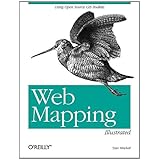
Web Mapping Illustrated: Using Open Source GIS Toolkits Review

Web Mapping Illustrated: Using Open Source GIS Toolkits
Average Reviews:

(More customer reviews)
I found this book a "tough call" when I came to writing a review.
I have to admit to not being a big fan of a lot of the technology showcased this book (PostGIS aside). I have professional reasons for saying this that do not concern us in this review but should be admitted up front.
Firstly I want to be clear that we should thank Tyler because he has done a very good job in weaving a consistent and useful thread through all the technologies in the book.
However, I had to think about why he chose these particular technologies and why the book was laid out the way it is because it was not initially clear to me what relevance a lot of them had to the book's title - Web Mapping. To me the title implied a richer potential content wrt "web mapping" per se, so that when I opened the book I was surprised to see that quite a bit of it was really about GIS basics such that a title more like "Getting started with MapServer" or "MapServer for GIS Dummies" (not an O'Reilly title I grant) might have been more appropriate!
I also don't know if this book accurately targets its audience. If you expect a real treatise on the University of Minnesota's MapServer then this book will not fill all your needs. If you want to see a set of open source technologies put together in a logical and coherent way so that you can start on understanding Web Mapping from one view point only then this book is useful.
On to the book itself.
He has also highlighted some important features of some of the technologies in a way that good training courses often do. The lights definitely go on and you will hear yourself say: "Ahh, so that's what this does!". That is what this book did for me across a number of technologies: in particular the OGR and GDAL command line tools. (Thanks, Tyler, for this alone.) He also does what all good trainers should do: he clearly demonstrated software functionality via concrete examples. It is my view that, except for university, most people learn by doing and this book works well in supporting those who find manuals and technical documents opaque when trying to assess software usefulness.
I really wasn't sure if the technical detail with respect to things like command line actions for installing, compiling and installing some software was that useful: I admit to skim reading this stuff. Is this Web Mapping for the uninitiated gun programmer? Or is this something that less technical geospatial professionals whose only world is that of the mainstream "pay per license" software products (on Windows) would get excited over? Unless command line computing is coming back and becoming mainstream again (and I am of that vintage), most people today expect the initial heavy lifting decisions to have been done for them so they can start "value adding" immediately. I think all the configuration decision making that is involved with open source technologies is still a big put off: I know it is to me, and I have 20+ years in the IT/GIS industry!
I also thought that the technologies described in the book showed what I can only describe as a North American (perhaps even Canadian) bias in the choice of technologies. Look, this is a bit of a quibble because I really can understand a lot of the choices precisely because the main distribution of the tools in the book (except PostGIS) is via FWTools which contains OpenEV, GDAL, MapServer & PROJ.4: all core technologies to the book. Yet I really don't think it is all that obvious. (I had to double check when writing this review.) Even so, my view is that more coverage should have been given to other open source technologies rather than a particular group. So, for example, why not cover the really big database of the open source community: MySQL (not just PostGIS)? And this oversight is strange given that the book mentions OGR/GDAL support for Oracle Spatial and ArcSDE which are of little interest (in one sense) to the open source people and are not accessible unless the company you work for has them. Also, why doesn't the book give more airtime to the excellent GeoServer WFS (and WMS) than just MapServer's read-only WFS? Why not hightlight the actively developed European managed Deegree WMS/WFS? Sure, MapServer has both WMS/WFS capabilities so let's concentrate on one rather than confuse people with others (just reference them instead - yet Deegree doesn't even get a mention in the book).
But all this musing gets me back to the title. Is it really "Web Mapping Illustrated"? Not really. Perhaps it should have been called "Getting started with MapServer". Too long? "FWTools Illustrated". Certainly not eye catching in terms of elucidating interest from browsers of bookshops and Amazon.
All in all, a good book and very useful. It certainly helped me and because of it I have decided to use some of the supporting technologies in it in my day job. Well done Tyler.

Click Here to see more reviews about: Web Mapping Illustrated: Using Open Source GIS Toolkits


With the help of the Internet and accompanying tools, creating and publishing online maps has become easier and rich with options. A city guide web site can use maps to show the location of restaurants, museums, and art venues. A business can post a map for reaching its offices. The state government can present a map showing average income by area.

Developers who want to publish maps on the web often discover that commercial tools cost too much and hunting down the free tools scattered across Internet can use up too much of your time and resources. Web Mapping Illustrated shows you how to create maps, even interactive maps, with free tools, including MapServer, OpenEV, GDAL/OGR, and PostGIS.It also explains how to find, collect, understand, use, and share mapping data, both over the traditional Web and using OGC-standard services like WFS and WMS.

Mapping is a growing field that goes beyond collecting and analyzing GIS data. Web Mapping Illustrated shows how to combine free geographic data, GPS, and data management tools into one resource for your mapping information needs so you don't have to lose your way while searching for it.

Remember the fun you had exploring the world with maps? Experience the fun again with Web Mapping Illustrated. This book will take you on a direct route to creating valuable maps.


Buy Now

Click here for more information about Web Mapping Illustrated: Using Open Source GIS Toolkits

Read More...

Absolute FreeBSD: The Complete Guide to FreeBSD, 2nd Edition Review

Absolute FreeBSD: The Complete Guide to FreeBSD, 2nd Edition
Average Reviews:

(More customer reviews)
Almost five years ago I reviewed Absolute BSD, Michael Lucas' first book on FreeBSD. I gave that book five stars, back when several other BSD books provided competition. On the eve of 2008, I am happy to say that Michael Lucas is probably the best system administration author I've read. I am amazed that he can communicate top-notch content with a sense of humor, while not offending the reader or sounding stupid. When was the last time you could physically feel yourself getting smarter while reading a book? If you are a beginning to average FreeBSD user, Absolute FreeBSD 2nd Ed (AF2E) will deliver that sensation in spades. Even more advanced users will find plenty to enjoy.
One of the best aspects of AF2E is that it is modern and covers FreeBSD 7.x. The previous edition covered 4.x, and plenty has changed since then. I've used FreeBSD regularly since 4.1.1 (Aug 2000), and AF2E taught me a lot about my favorite OS. Michael's coverage of GEOM, NanoBSD, FreeSBIE, journaling, memory file systems, filesystems in a file, and other topics really opened my eyes. Michael delivers excellent line-by-line explanations of system output, using numbered references to guide the reader.
Another major reason I love AF2E is that it is a good system administration book that covers plenty of FreeBSD nuances. Michael shares many of his experiences running FreeBSD in production, and I always believe he is teaching the reader what he or she needs to use FreeBSD to support customers. For example, I liked the hint on p 221 about disabling hard drive write caching (hw.ata.wc=0 in /boot/loader.conf). I also liked hearing about netstat -m to see kernel memory used for networking.
The book is also very lively for a system administration title. One of my favorite lines appears on p 135:
"Ethernet has many device-like characteristics, and it's simplest for FreeBSD to treat it as a device. Leave this [kernel option alone], unless you're looking for a learning opportunity."
So far AF2E has received all positive reviews, but I'm sure there's some deficiency another reader will report. In an ideal world I would have read more on FreeBSD binary updates, especially those involving minor releases (say 6.2 to 6.3) and major releases (say 6.2 to 7.0). Those developments are too recent to have appeared in the book, but they appear in 7.0 and will provide exceptional power for many users. I think enough completely FreeBSD-specific chapters (performance tuning, /etc, and others) are present that it's easy to say this is an awesome FreeBSD book.
If you want more coverage of Pf (and found AF2E's material lacking), just buy a copy of the new title The Book of PF: A No-Nonsense Guide to the OpenBSD Firewall by Peter Hansteen. If you want more detail on installing certain applications on FreeBSD, buy Building a Server with FreeBSD 7 by Bryan Hong. Kudos to No Starch for publishing AF2E and these other BSD titles.

Click Here to see more reviews about: Absolute FreeBSD: The Complete Guide to FreeBSD, 2nd Edition


FreeBSD—the powerful, flexible, and free Unix-like operating system—is the preferred server for many enterprises. But it can be even trickier to use than either Unix or Linux, and harder still to master.

Absolute FreeBSD, 2nd Edition is your complete guide to FreeBSD, written by FreeBSD committer Michael W. Lucas. Lucas considers this completely revised and rewritten second edition of his landmark work to be his best work ever; a true product of his love for FreeBSD and the support of the FreeBSD community. Absolute FreeBSD, 2nd Edition covers installation, networking, security, network services, system performance, kernel tweaking, filesystems, SMP, upgrading, crash debugging, and much more, including coverage of how to:

Use advanced security features like packet filtering, virtual machines, and host-based intrusion detection
Build custom live FreeBSD CDs and bootable flash
Manage network services and filesystems
Use DNS and set up email, IMAP, web, and FTP services for both servers and clients
Monitor your system with performance-testing and troubleshooting tools
Run diskless systems
Manage schedulers, remap shared libraries, and optimize your system for your hardware and your workload
Build custom network appliances with embedded FreeBSD
Implement redundant disks, even without special hardware
Integrate FreeBSD-specific SNMP into your network management system.

Whether you're just getting started with FreeBSD or you've been using it for years, you'll find this book to be the definitive guide to FreeBSD that you've been waiting for.


Buy Now

Click here for more information about Absolute FreeBSD: The Complete Guide to FreeBSD, 2nd Edition

Read More...