Showing posts with label atom. Show all posts

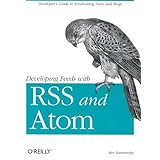
Developing Feeds with Rss and Atom Review

Developing Feeds with Rss and Atom
Average Reviews:

(More customer reviews)
This book has some good resource citings, and general information on RSS. It includes a lot of discussion on the previous iterations in the RSS geneology...up to the current RSS 2.0 specification.
The index is not very thorough.
I bought the book hoping to learn more about RSS feed development (as the title suggests). I was greatly disappointed. There is one chapter dedicated to RSS 2.0. Within the chapter there is a section entitled "Creating RSS 2.0 Feeds." This section--you would think is the core of the book-- is 8 pages long (if that) including 3 pages of Perl code examples.
Good luck if you want to learn about creating Atom feeds from this publication. There is a 14 page chapter dedicated to Atom. It is prefaced with a disclaimer indicating that code in the chapter may fail due to version rot (and to surf the web for answers). Also in this chapter, there is a section entitled "Producing Atom Feeds." This consists of 2 brief paragraphs explaining how the current Atom version is not worth addressing and suggests purchasing the next edition of the book to find out how to produce feeds using up to date libraries!!!
You can draw your own conclusions from all that.
This book falls far short of the quality O'Reilly books of yore.

Click Here to see more reviews about: Developing Feeds with Rss and Atom


Perhaps the most explosive technological trend over the past two years has been blogging.As a matter of fact, it's been reported that the number of blogs during that time has grown from 100,000 to 4.8 million-with no end to this growth in sight.

What's the technology that makes blogging tick?The answer is RSS--a format that allows bloggers to offer XML-based feeds of their content.It's also the same technology that's incorporated into the websites of media outlets so they can offer material (headlines, links, articles, etc.) syndicated by other sites.

As the main technology behind this rapidly growing field of content syndication, RSS is constantly evolving to keep pace with worldwide demand.That's where Developing Feeds with RSS and Atom steps in.It provides bloggers, web developers, and programmers with a thorough explanation of syndication in general and the most popular technologies used to develop feeds.

This book not only highlights all the new features of RSS 2.0-the most recent RSS specification-but also offers complete coverage of its close second in the XML-feed arena, Atom. The book has been exhaustively revised to explain:

metadata interpretation
the different forms of content syndication
the increasing use of web services
how to use popular RSS news aggregators on the market
After an introduction that examines Internet content syndication in general (its purpose, limitations, and traditions), this step-by-step guide tackles various RSS and Atom vocabularies, as well as techniques for applying syndication to problems beyond news feeds.Most importantly, it gives you a firm handle on how to create your own feeds, and consume or combine other feeds.
If you're interested in producing your own content feed, Developing Feeds with RSS and Atom is the one book you'll want in hand.


Buy Now

Click here for more information about Developing Feeds with Rss and Atom

Read More...

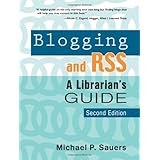
Blogging and RSS: A Librarian's Guide, Second Edition Review

Blogging and RSS: A Librarian's Guide, Second Edition
Average Reviews:

(More customer reviews)
I am not a blogger or a librarian, but by the end of the year I should be both. So this seemed like a good book to check out so I can hit the blogosphere and job market running. Now, before I start kvetching, let me state that this book does a perfectly good job at what it does, and my primary complaint is that I wish it did more, and did it in greater depth.
Basically, this is "Blogging and RSS for Dummies", with a very small dollop of librarian content. Yes, it kicks off with about 70 pages on "The Library Blogosphere," however the bulk of this material is devoted to the ten or so "stars" of library blogging (shiftedlibrarian, librarystuff, librarian.net, etc.). You get small write ups about each of these blogs, excerpts to indicate their tone, screenshots, and then their authors' answers to a brief questionnaire. This may be useful if you've got a lot to say about the profession and aim to crack their ranks, or if you're new to blogs and want to know what the good librarian ones are (although a two minute online search would lead you to the same blogs), but there's very very little information about how libraries use blogs. I guess the book I really want to read would be something like "Blogging and RSS for Libraries" (not "Librarians").
When it comes to actual blog creation, Sauers limits his tutorial (and that's what it is) to the free "Blogger" service (now a Google property), with only a one paragraph mention of server-based packages such as WordPress, MoveableType, and TypePad. Blogger is great at what it does -- you can have a nice-looking, free, basic blog up and running in minutes (well, as long as you have a Gmail account). However, most libraries are likely going to need the flexibility and custom features of the more robust server-based packages noted above. Blogger is so easy and well-documented that most people can probably skip the 40 pages of hand-holding covering blog set-up and preferences. Still, if that's what you need, this book does an outstanding job of walking you through the process, with plenty of screenshots to illustrate the way. However, it would have been far more useful to devote that space to server-based packages, which do require more hand-holding.
RSS is a bit more complicated and thus somewhat more worthy of Sauer's baby-step explanations. Again, the focus is on the simplest method, so while various flavors of aggregators are mentioned (stand-alone client, embedded client, and server-based), Sauers advocates and concentrates on the popular web-based Bloglines service (which now belongs to Ask.com). Again, Bloglines is so well documented, I'm not sure what the point of a lengthy print-based guide to account setup and maintenance is, but if you need it, it's here. And although RSS is of clear benefit to an individual librarian who's trying to keep informed, it's never explained how or why libraries might want to implement it to serve information to their users. RSS has some real practical applications, especially in special libraries, but these are never mentioned. There's a chapter outlining feeds that may be of interest to librarians, but again, these are easily found online, and I'm not sure what the point of putting them in print (where the information will be outdated almost instantly) is, when they could just all be listed on a companion web page. I'm also not sure what the value is of seeing a screenshot for every single blog and feed mentioned (another quibble is that these are often reproduced too lightly for easy legibility).
In the end, this isn't a bad starting point if you know nothing about blogs or RSS, but for anyone with even a minimum exposure to these tools and a specific interest in how their use might improve library service, it's unlikely to be very useful.

Click Here to see more reviews about: Blogging and RSS: A Librarian's Guide, Second Edition


In this fully updated second edition of his popular 2006 book, Michael P. Sauers shows how blogging and RSS technology can be easily and successfully used by libraries and librarians. In addition to providing easy-to-follow instructions for creating, publishing, and syndicating a blog using free web-based services, software, RSS feeds, and aggregators, Sauers covers newtools and services, introduces numerous useful library blogs and bloggers, and includes a new chapter on microblogging with Twitter.


Buy Now

Click here for more information about Blogging and RSS: A Librarian's Guide, Second Edition

Read More...